System Design
Chapter 22
Caching and CDNs
A cache is a small, fast copy of data kept close to where it is needed, so you avoid a slow trip to the database every time. Caching is the single highest leverage move for read heavy systems, which is most systems. It also brings the hardest problem in the field: knowing when the cached copy is stale.
Where caching happens
Caching lives at many layers. The browser caches on the client. A content delivery network caches near the user at the edge. Your application caches hot data in memory using something like Redis or Memcached. Even the database caches its own frequent queries. Each layer you add removes load from the layer behind it.
Cache fast, in memory 1 look here first hit: return 3 store result App server 2 on a miss, query Database slower, on disk Cache aside: check the cache, fall back to the database, then fill the cache.
Read and write strategies
The most common read pattern is cache aside: the app checks the cache, and on a miss it reads the database and then stores the value in the cache for next time. For writes you choose how the cache and database stay in step. Write through updates both on every write, so the cache is always fresh but writes are a little slower. Write back updates the cache immediately and the database later, which is fast but risks losing data if the cache dies first. Write around writes only to the database and lets the cache fill on the next read, which avoids caching data nobody reads.
Eviction and the staleness problem
A cache is small, so it must throw things out. The usual policy is least recently used, which evicts whatever has not been touched in the longest time. Others include least frequently used and a simple time to live that expires entries after a set period.
The famous hard part is invalidation. When the underlying data changes, the cached copy is now wrong, and serving stale data can be anything from harmless to dangerous. The tools are a time to live so entries expire on their own, explicit invalidation when you know data changed, and versioned keys so a new version simply misses the old cache.
PROS CONS Reads get dramatically faster and Stale data is possible, and invalidation is cheaper genuinely hard The database is shielded from repetitive A cache adds a moving part that can fail load or fill up A CDN cuts latency by serving content A sudden loss of the cache can near the user stampede the database
C O N T E N T D E L I V E R Y N E T W O R K S
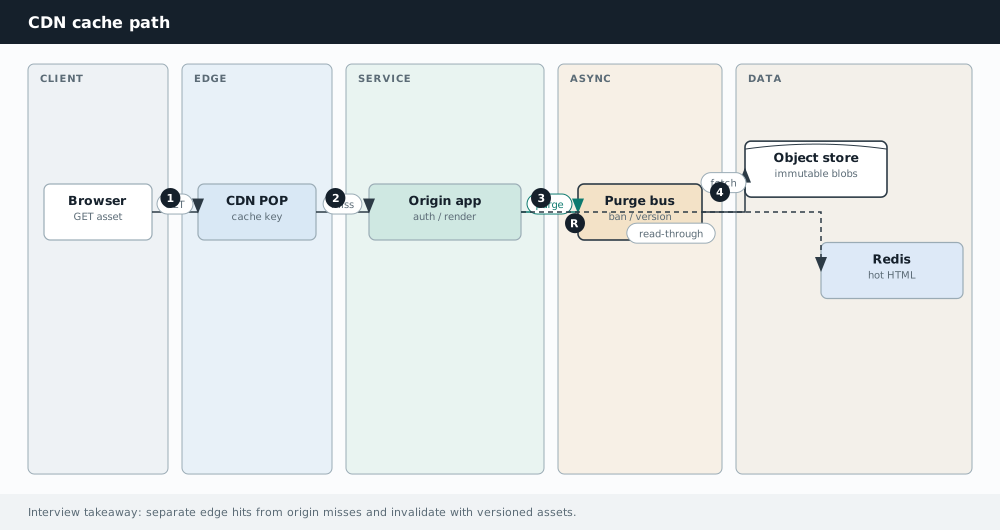
A CDN is a global cache for static content like images, video, scripts, and styles. It stores copies at edge locations around the world, so a user in Tokyo is served from a nearby machine instead of your origin server across the ocean. This slashes latency and takes a huge load off your own servers.
Going Deeper
Layers of cache, and the stampede to avoid
Caching is rarely one cache. It is a stack: the browser, then a CDN at the edge, then an in memory cache in front of the database, and each layer that hits shields the layers behind it. The classic failure mode is a cache stampede: a popular key expires and thousands of requests miss at the same instant, all hammering the database together and sometimes knocking it over. The fixes are to let only one request refill a missing key while the others briefly wait, to stagger expiry times so keys
do not all die at once, and to serve slightly stale data while a fresh copy is fetched in the background. each layer absorbs traffic, only misses fall through to the next miss miss miss Browser CDN App cache Database local cache edge cache in memory source of truth Caching is a stack of layers. A hit at any layer returns early, so only misses reach the database.
T H R E E W A Y S T O K E E P A C A C H E F R E S H
Time to live expires entries on their own after a set period, which is simple but can serve stale data until it lapses. Explicit invalidation deletes or updates the entry the moment the source changes, which is precise but needs you to catch every change. Versioned keys sidestep the problem by writing to a new key on each change, so a stale entry is simply never read again.
S T E P B Y S T E P
How one read flows through cache aside, the most common caching pattern.
The application receives a read request for some data. 1 It looks in the cache first. 2 On a hit, it returns the cached value immediately, never touching the database. 3 On a miss, it reads the value from the database. 4 It writes that value into the cache, then returns it, so the next identical read is a fast hit. 5
Interview drill — Caching
Operate systems, don't recite buzzwords.
More drills in the Interview Lab.
Q1. Design a distributed cache
Q2. Cache stampede
Hot key expires → DB melt.
Soft TTL + background refresh; request coalescing; probabilistic early expire.
Q3. Write strategies
Cache vs DB first?
Write-through for freshness; write-behind for throughput (risk); invalidate-on-write is the common microservice pattern.
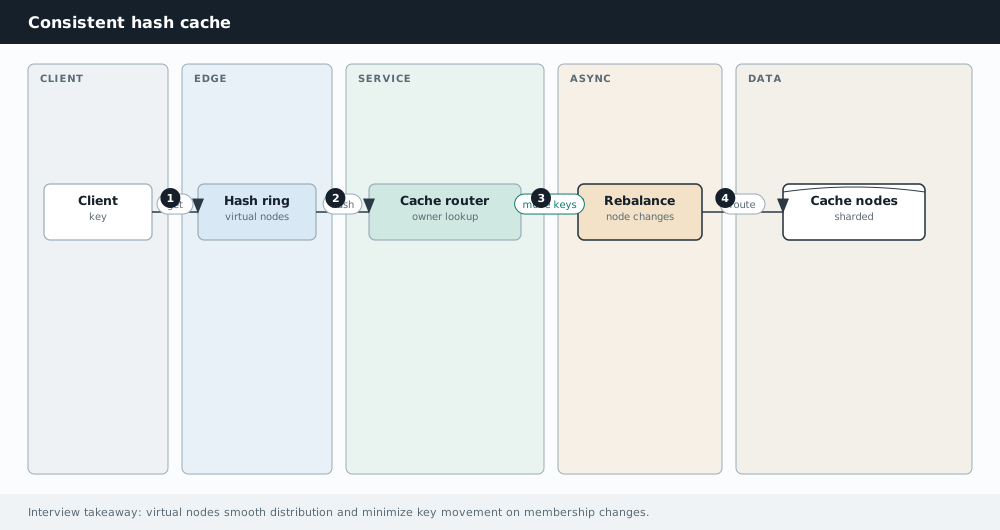
Q4. CDN vs app cache
What belongs on CDN?
Cacheable HTTP near users. Personalized/auth data stays in app/Redis.